Orders Booked Through Year-End: One in Every Ten New Energy EVs Equipped with Sensors from This Wuhan Enterprise
Orders Booked Through Year-End: One in Every Ten New Energy EVs Equipped with Sensors from This Wuhan Enterprise Sensors form the "nervous system" of automobiles. A new energy vehicle may contain dozens to over a hundred such components. Based in Wuhan, an enterprise founded less than five years ago has captured approximately 10.44% of China’s market for position sensors used in new energy vehicles. “To put it simply, one out of every ten new energy vehicles rolling off production lines nationwide carries our products. We have supplied roughly 1.3 million vehicles so far this year,” said Li Cheng, Chairman of Innosensing (Wuhan Shengshi Qichuang Technology Co., Ltd.) on June 5. Sales in the first five months of this year rose 80% year-on-year, with order backlogs stretching until the end of the year. In addition, the company’s newly developed high-precision inductive encoder, a core component for humanoid robot servo joints, has passed multiple rounds of verification and will debut at an industry exhibition next month.
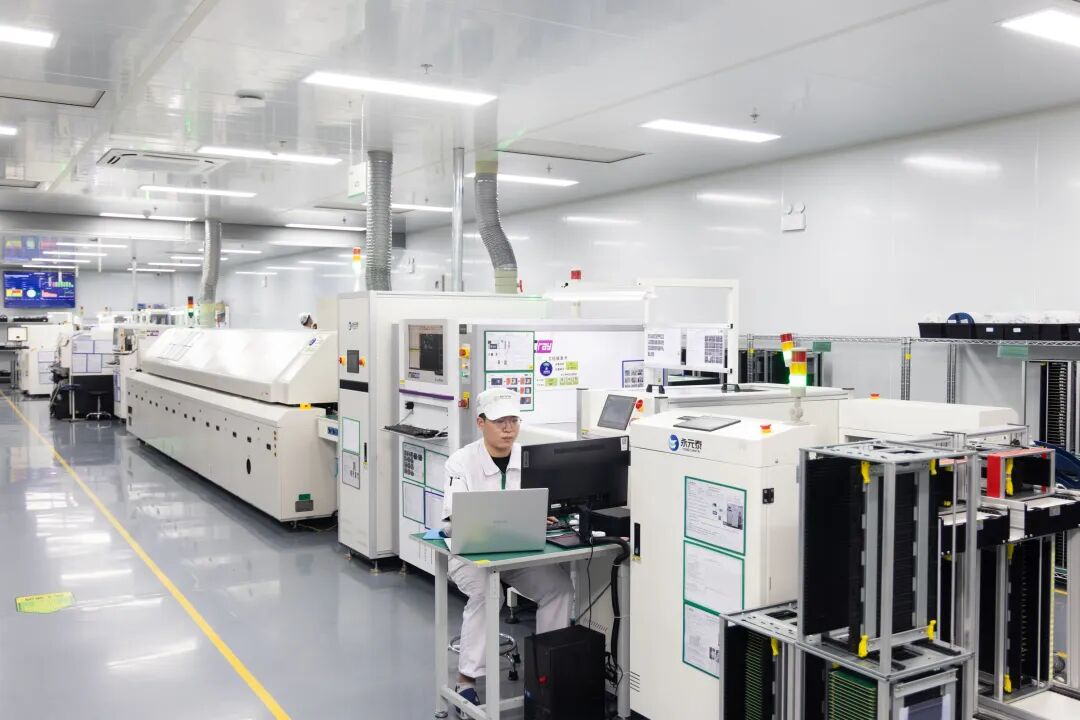
▲ A view of Innosensing’s production workshop in Wuhan Economic & Technological Development Zone. Strong Performance Amid Off-Season: Daily Output Exceeds 35,000 Sets of Sensors June is traditionally an off-season for the automotive sector. Nevertheless, nearly 30 production lines run at full capacity inside Innosensing’s thousands-of-square-meter dust-free workshop. Before entering the workshop, reporters were required to put on dust-proof suits and caps and go through air shower cleaning. “Not a single hair can be exposed,” a staff member reminded during inspection. Automated production lines operate quietly and at high speed. Tiny sensor chips go through dozens of processes including surface mounting, encapsulation and testing, and are labeled with traceable QR codes before shipment to global markets. Production dashboards display real-time output and yield rates for eddy current sensors, current sensors, position sensors and controllers. At around 5 p.m., the day’s yield hit 99.1%, following a perfect 100.0% yield recorded the previous day.
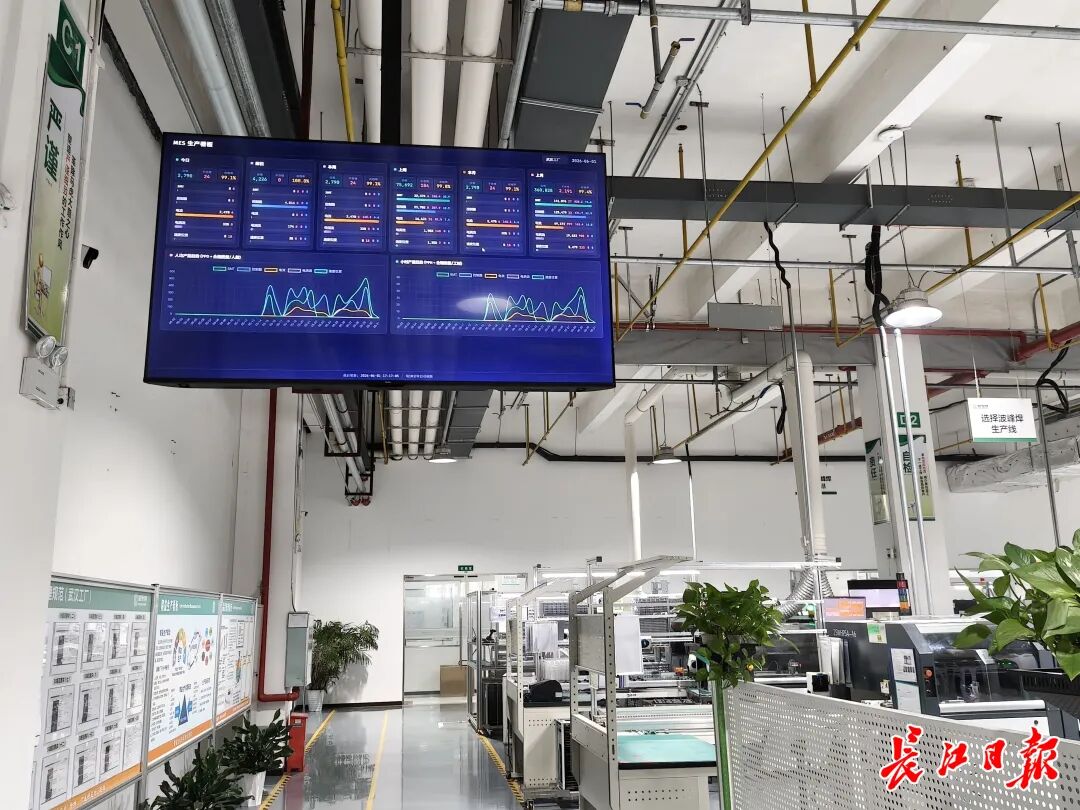
▲ Real-time production data displayed on an electronic screen inside the workshop. “Production progress, cycle time, yield and other data are synchronized to OEM customers, who can monitor conditions in real time,” said Rao Siping, Vice President of Operations. At present, the workshop turns out an average of 15,000 controllers and 20,000 sensors daily, with production capacity set to expand further in the second half of the year. These fist-sized core components act as the "nerve endings" of new energy vehicles: current sensors monitor drive motor current, position sensors track key parts of the powertrain, and controllers enable multi-scenario adjustments for vehicle seats. Adjacent to the production workshop lies a CNAS-accredited laboratory, where precision instruments run continuously with data curves flickering on screens. “Every single sensor undergoes dozens of tests; some reliability trials last thousands of hours at a stretch,” explained a test engineer.
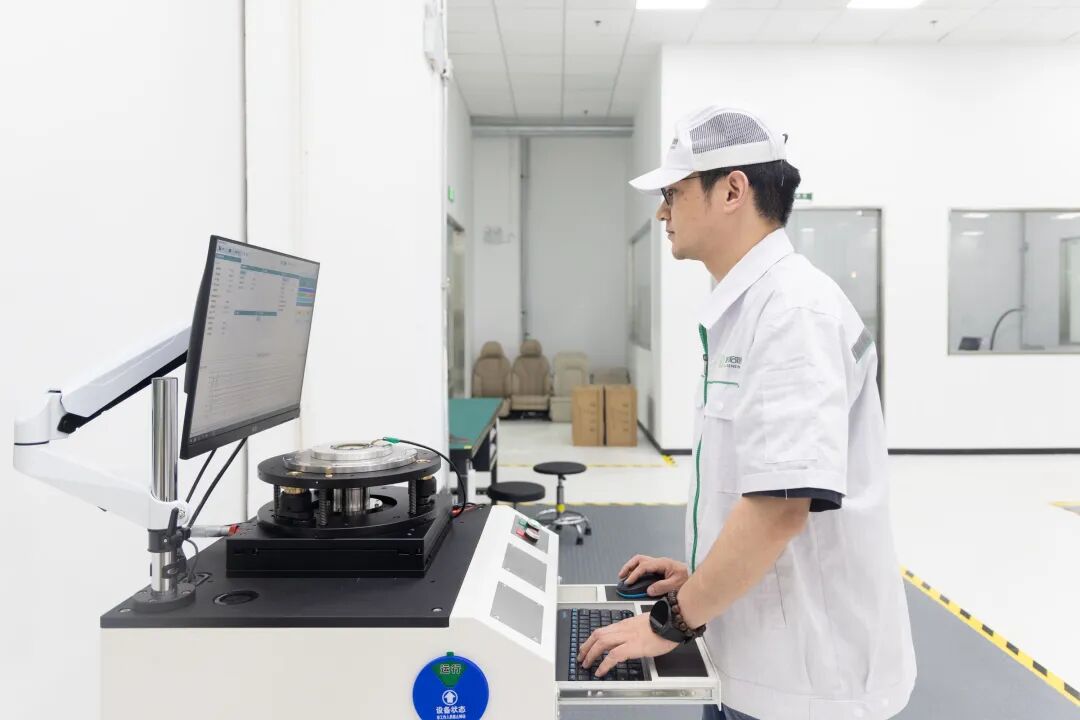
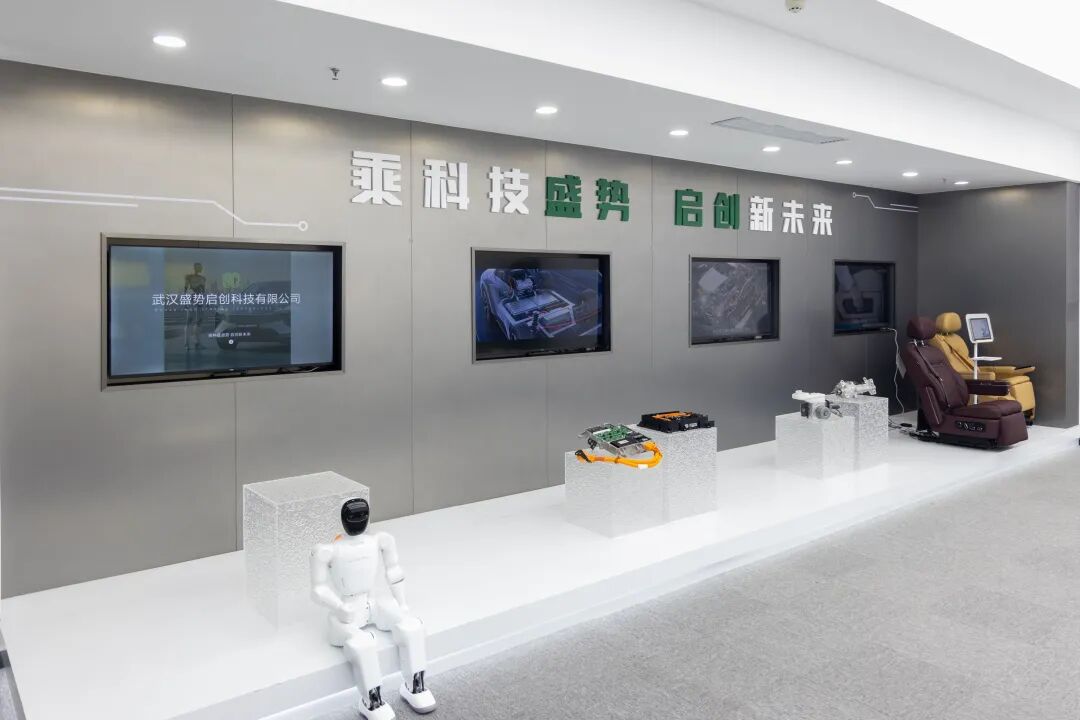
▲ Engineer Shu Ting conducts tests for new product development in the laboratory. In the enterprise exhibition hall, exhibits are neatly arranged: current sensors, position sensors, seat controllers, eddy current sensors, alongside inductive encoders built for humanoid robots. The product portfolio keeps expanding from automotive core components to key robotic parts.
Clients include domestic mainstream new energy vehicle brands such as Voyah, Xiaomi Auto, Leapmotor, Li Auto and Seres. Over 80% of Chinese independent automakers feature on Innosensing’s customer list. Headquartered in Wuhan Economic & Technological Development Zone, the firm grew from an annual sales volume of RMB 1 million upon establishment in 2021 to nearly RMB 150 million in 2025. It has secured over RMB 100 million in industrial investment from backers including Xiaomi Industrial Investment, Chery Ruicheng Investment and Dongfeng Asset Management. Innosensing has also been recognized as a Hubei Provincial Sci-Tech "New Species" Enterprise, a Wuhan Key Gazelle Enterprise, and a Wuhan Seed Unicorn Enterprise. Precision Equivalent to One-Tenth of a Human Hair: Core Robotic Joint Components to Launch Next Month In Chairman Li Cheng’s office, two dark desks stand side-by-side: one for daily work and the other for small seminars and client receptions. Disassembled sensors and circuit boards are stacked on the corner of the desk. Picking up a fist-sized ring-shaped high-precision inductive encoder, Li Cheng introduced: “This is a critical component for servo joints on humanoid robots. Its detection precision reaches one-tenth the diameter of a human hair. Globally, R&D for comparable products is generally at the same stage.” Composed of a PCB embedded with coil layers and a rotating disc with etched conductive patterns, the encoder acts like a pair of “eyes” fitted on robot joints. It captures motor rotation angles in real time to ensure every robotic movement is accurately controlled. This core technology is not built from scratch; it stems from years of mature R&D accumulated by the company on sensors for automotive drive motors and drive-by-wire chassis systems.
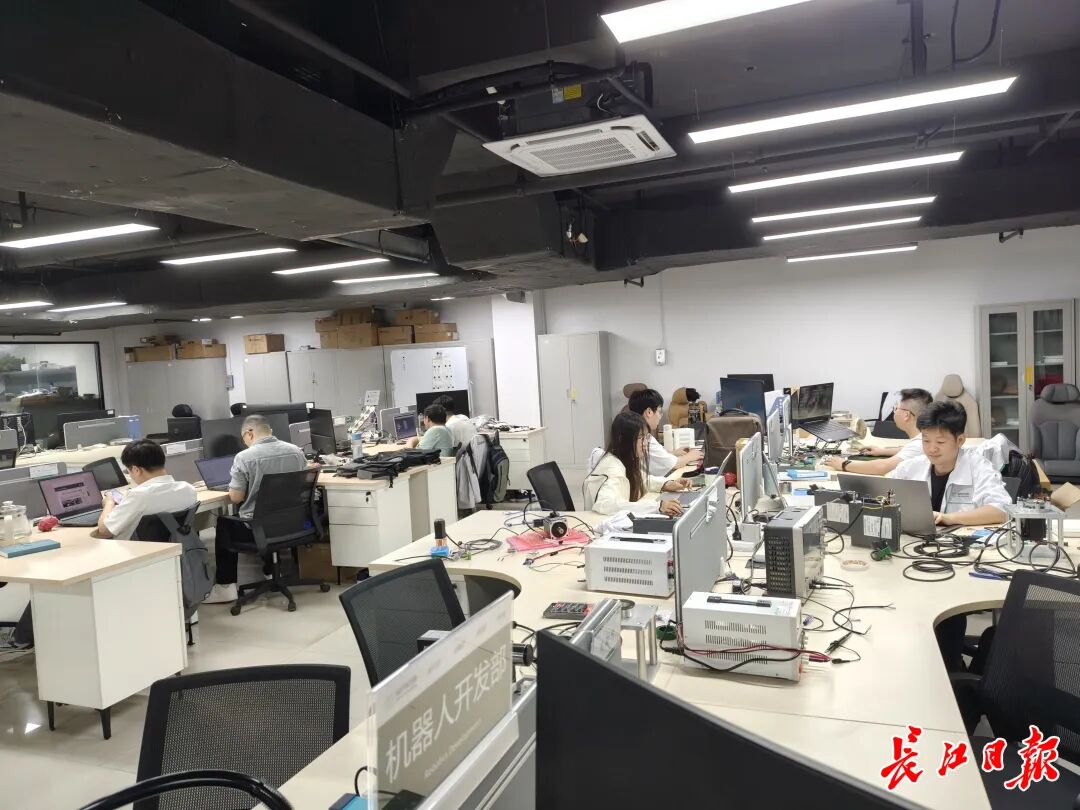
▲ Team members of the Robot Development Department at work. Having worked in the auto parts industry for more than a decade, Li Cheng found that smart vehicles and humanoid robots share over 70% of underlying technology, both following the “perception-decision-execution” logic. For this reason, when founding Innosensing, he targeted both new energy vehicles and intelligent robots. In his view, the industrialization of robotic components is no blind cross-industry venture. Instead, it represents homologous extension of vehicle-grade sensing technology, opening up a second growth curve for the company. Technical implementation proved challenging. As Shu Ting, Product Manager of the Robot Development Department, explained, high-speed operation of robot motors generates strong electromagnetic interference, which once severely impaired encoder measurement accuracy. Through hardware restructuring and iterative algorithm optimization, the R&D team completed nearly a hundred rounds of electromagnetic compatibility and durability testing to continuously boost the product’s signal-to-noise ratio. Cross-domain coordination posed another hurdle. The automotive R&D team adhered to zero-defect vehicle-grade standards, while the robotics team prioritized rapid iteration and market rollout. Numerous brainstorming sessions witnessed heated debates and clashing opinions. Ultimately, the team delivered samples in less than half a year after project initiation. Innosensing is pushing ahead with multiple strategic layouts. It cooperates with the School of Artificial Intelligence, Wuhan University on projects including “AI + Intelligent Cockpit” and “AI + Intelligent Manufacturing”. A robotic sensing R&D center has been set up in Shanghai to recruit high-end R&D talent. Meanwhile, the company plans to build dedicated production lines in Wuhan to realize mass production of inductive encoders for humanoid robots.
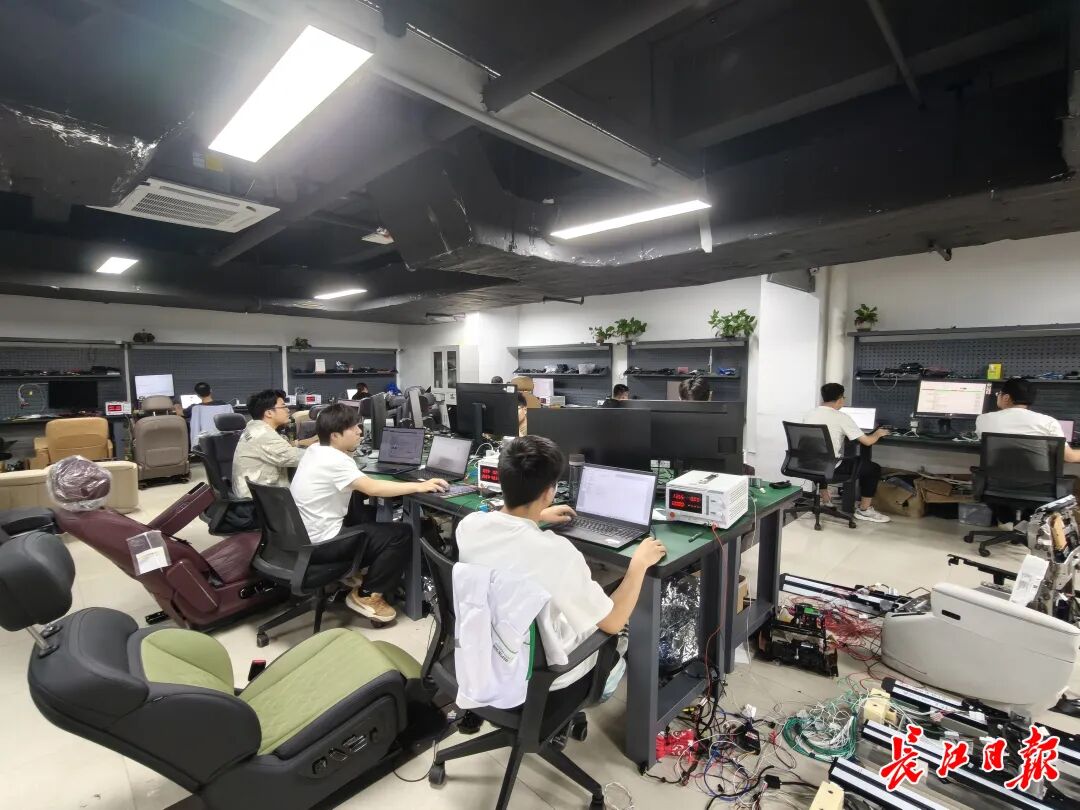
▲ Researchers carry out tests related to intelligent cockpit systems. Innosensing is not alone. Within Wuhan Economic & Technological Development Zone, local vehicle manufacturers and component suppliers such as Dongfeng Motor, Ecovacs Automotive Technology, Huanyu Intelligent Mobility and Fanzhou Precision are leveraging their expertise in complete vehicles and precision manufacturing to seize new growth opportunities embodied intelligence and humanoid robotics.